The Celestial Key
How the Precession, Göbekli Tepe, and the Galactic Center Solved the Ultimate Ancient Riddle

When we were children and were taught in school about the great mysteries of the world, we were overcome with a certain amount of awe. I can clearly remember thinking there was a deeper mystery encoded in these monuments. At the time it seemed that humans had no way of deciphering this elusive riddle. As we get older, we tend to lose some of that innocent magic that comes with a child’s perception. A child is encountering everything for the first time without society’s mental overlay, knowing the abundant perception of mystery that a child perceives directly. Because of the sheer amount of human intellect that has gone towards uncovering the truth about these mysteries, we are now at a time period where we can look back and have a truly absurd amount of resources to pull from.
Although I have not seen this level of synthesis anywhere else in my time researching these topics, I do not claim in an egotistical way, to be the one to produce this synthesis. I am filled with an immense sense of gratitude when looking back and viewing the abundant number of human beings that have dedicated most of their lives researching and decoding all of these topics. The other reason why I can feel no egotistical sense of grandeur is that many times in my research I was completely stumped and hit a wall, lacking the next resource to deepen my understanding.
This is where another level of immense gratitude has been developed, as there have been many times when I have been perusing a bookstore or passing by a free book rack, or going to a random thrift shop, where I have found just the book I was looking for and needed to deepen my understanding. All of the books referenced in this article have found me in ways that I cannot explain with my rational brain, which thinks only in linear time. Every great religion in the past has described that when a seeker truly asks, the answer is unveiled. This should not be taken in an ordained, authoritative way, but more like the renowned prophet Carl Jung described as synchronicity.
My other sense of gratitude comes from the realization that we sit at a time when we are able to search any prophetic text, any book, any research paper in the vast library that is the internet. Practically any source that you want is available at any time in virtually any configuration that you may want to read. The invention of artificial intelligence, although created for a malicious reason, has allowed the seeker to be able to synthesize the level of knowledge acquired in a way that is awe-inspiring. One cannot take egoic pride once they realize the sheer amount of human effort that has gone into transcribing this information for the future, the advent of the internet which allows virtually any resource to be available, and artificial intelligence which can synthesize the inputted information at a level that took years and now takes only minutes.
The Pyramids of Giza
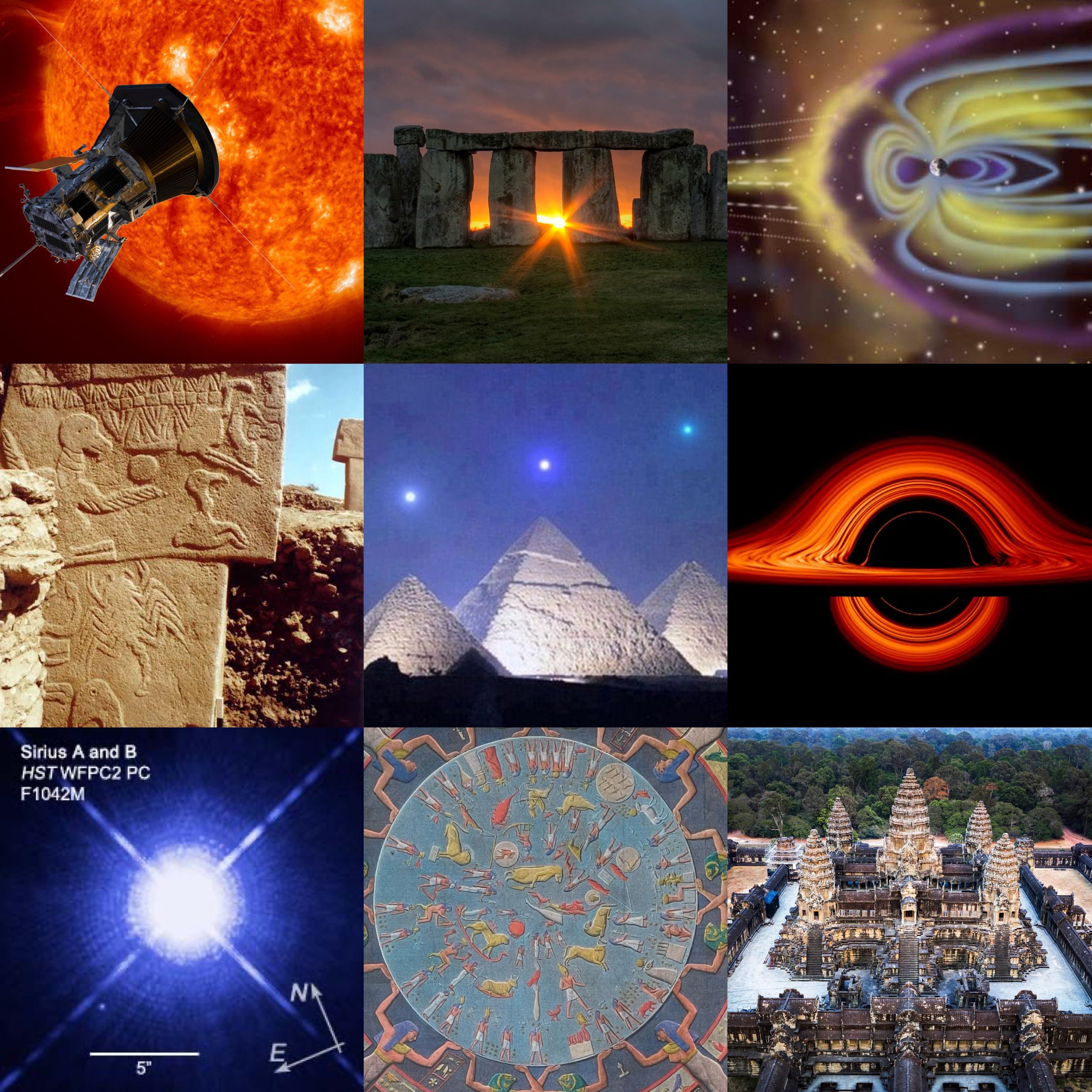
The Egyptian pyramids are basically the largest mystery in the modern world. Who built them, why did they build them, and how did they build them are answers that still elude the modern mind, even if there are compelling answers to these questions. Although those answers, I would believe, would fundamentally change our understanding of reality, the things that we can know, I would argue, do just the same. What we do know is that somewhere around 2500 BCE, someone decided that the most important thing they could do with millions of limestone blocks was point them at specific stars.
This is not symbolic nor is it approximate. The pyramids are positioned with the precision of an architect who knew exactly which star they were targeting and exactly how many degrees above the horizon it would appear.
The Great Pyramid of Giza contains four narrow shafts, two from the King's Chamber, and two from the Queen's Chamber. These shafts are bored through hundreds of feet of solid stone at precise angles. For most of history, their purpose was unknown. In the 1990s however, researcher Robert Bauval identified their purpose. Each shaft aimed at a specific star as it crossed the meridian during the era of the pyramid's construction.
The southern shaft of the King's Chamber points at Orion's belt, specifically at Al Nitak, the lowest of the three belt stars. The southern shaft of the Queen's Chamber points at Sirius, the brightest star in the night sky. The northern shafts point at the celestial pole stars of the era.
Why would anyone drill four telescope-like shafts through millions of tons of limestone to point at four specific stars? The question gets stranger when you notice what Bauval noticed. The three Giza pyramids, Khufu, Khafre, and Menkaure, are not arranged in a straight line, they are offset. Menkaure, the smallest, sits slightly to the southeast of the line formed by the other two. For decades, Egyptologists explained this as a practical choice; the terrain, the available bedrock, the logistics of construction.
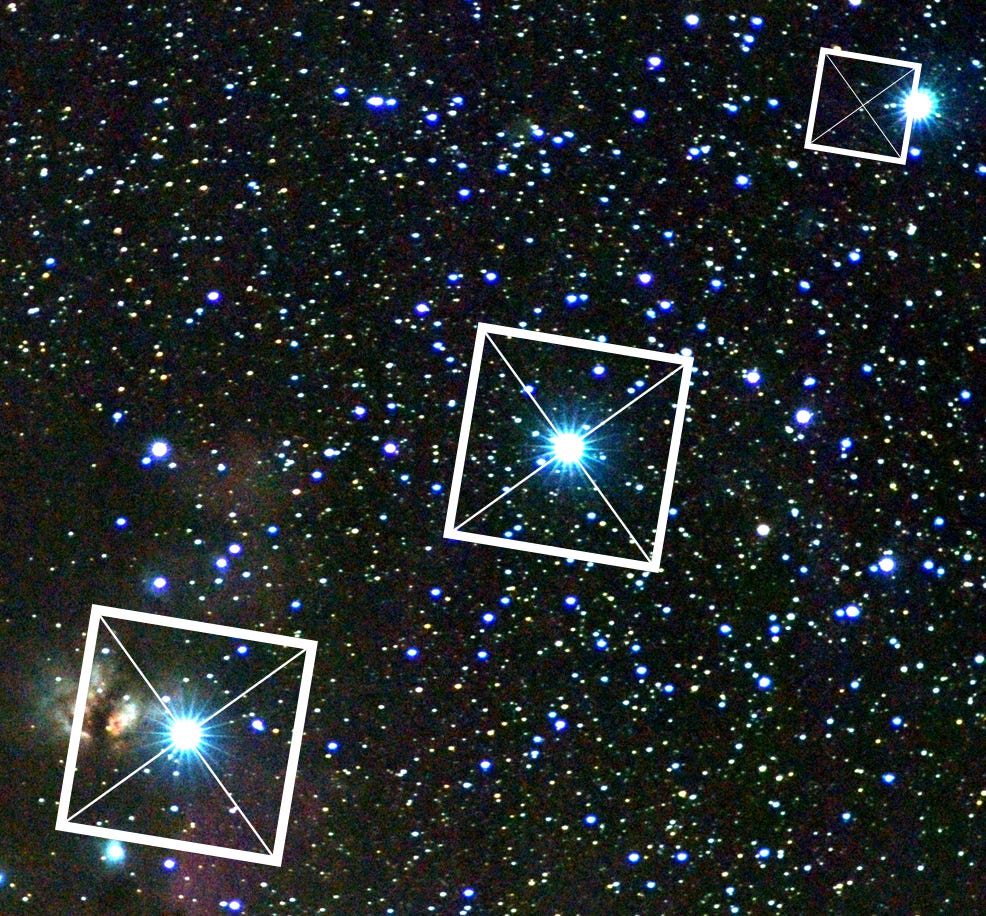
During his research however, Bauval saw something else. The three pyramids' arrangement on the ground mirrors the three stars of Orion's belt in the sky. The two larger pyramids correspond to the two brighter belt stars (Al Nitak and Al Nilam). The smaller pyramid, offset to the side, corresponds to the dimmer, offset third star (Mintaka). The Nile, running to the east, corresponds to the Milky Way, which runs beside Orion in the night sky (1).
The Giza plateau is a map of Orion's belt laid on the earth. But what makes the encoding genuinely strange is the fact that due to the precession of the equinoxes, the slow wobble of Earth's axis that shifts the apparent positions of the stars over a roughly 26,000-year cycle, the pyramids' ground plan doesn't match Orion's position in 2500 BCE, when conventional Egyptology says they were built. The ground plan matches Orion's position in approximately 10,500 BCE (2).
That date falls immediately before the Younger Dryas, the catastrophic climate event that ended the last ice age, produced massive flooding across multiple continents, and was the event that ended the previous world.
The pyramids aren't pointing at the sky of their builders' time, they are pointing at the sky of a previous age; a memorial encoded in stone, aimed at the celestial configuration that accompanied the end of the world before this one.
Angkor Wat

Halfway around the world, in the jungles of Cambodia, the Angkor temple complex sprawls across more than 400 square kilometers. It is one of the largest religious monuments ever constructed. The Conventional dating process places the temples between the 9th and 15th centuries CE.
Researcher Graham Hancock extended Bauval's methodology to Angkor and found a similar encoding. The arrangement of the major Angkor temples on the ground mirrors the stars of the constellation Draco, the dragon that coils around the north celestial pole. Like Giza, the correlation doesn't match the sky of the temples' conventional construction date. The Angkor ground plan matches Draco's position at approximately 10,500 BCE… the same date as the Giza-Orion correlation (3).
We have evidence of two monumental complexes from two different continents, supposedly two different civilizations separated by thousands of miles and thousands of years of conventional history. Both encoding the same date. Both point at the sky of the same vanished era.
Either this is the most extraordinary coincidence in architectural history, or the conventional dating of these sites' conceptual origins needs revision. Or, and I believe this to be more likely, both complexes are drawing from the same source, a knowledge tradition, a predecessor civilization, a shared memory, that predates both of them by millennia.
Göbekli Tepe
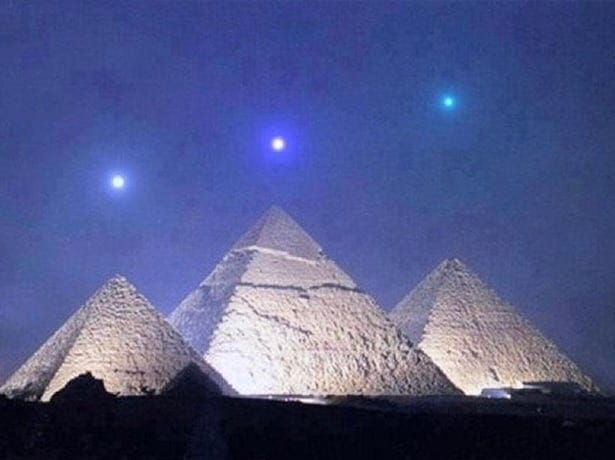
In 1994, German archaeologist Klaus Schmidt began excavating a hilltop site in southeastern Turkey called Göbekli Tepe. What he uncovered stunned the archaeological world. He found massive carved stone pillars arranged in circles, decorated with animal reliefs of extraordinary skill, dating to approximately 9600 BCE, making Göbekli Tepe the oldest known monumental architecture on earth (4).
The site predates Stonehenge by approximately 6,000 years, and predates the pyramids by approximately 7,000 years. It predates the invention of writing, the invention of agriculture, the invention of pottery, and the earliest known cities.
The conventional understanding of human history says that hunter-gatherers don't and couldn’t build monuments. Monuments require organized labor which requires agriculture which requires permanent settlements. The conventional sequence is supposed to be: first comes agriculture then settlements then organization then monuments. This simple sequence skips over the countless decades it would take to acquire mathematical, astrological, and craftsmanship skills to do such a thing. Göbekli Tepe completely inverts the sequence. The monument came first, then the organization to build it somehow preceded the agricultural revolution that was supposed to make the organization possible.
The most significant feature of Göbekli Tepe isn't its age, which completely disorients the modern perception of linear progress. The most significant feature is what it encodes. Pillar 43, called the Vulture Stone, is covered with animal carvings that researchers Martin Sweatman and Dimitrios Tsikritsis analyzed as astronomical symbols. Their analysis, published in the journal Mediterranean Archaeology and Archaeometry, found that the carvings encode the positions of specific constellations relative to the solstice point at the time of the Younger Dryas, the same catastrophic event that the Giza ground plan memorializes (5).
The Vulture Stone's central figure, a vulture with a disc above its wing, corresponds to the constellation Sagittarius and the position of the galactic center, the supermassive black hole at the core of the Milky Way, the gravitational and energetic center of our galaxy.
Göbekli Tepe was built after the Younger Dryas event by survivors of whatever civilization existed before the event. The builders didn't just survive the event but encoded the astronomical configuration that accompanied the catastrophe. They carved it into stone and then, remarkably, buried the site, deliberately filling it with rubble and earth so that the encoding would be preserved beneath the surface for future discovery (4). They buried their message so it would survive whatever came next and it survived for 11,600 years.
Sirius
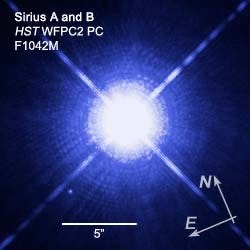
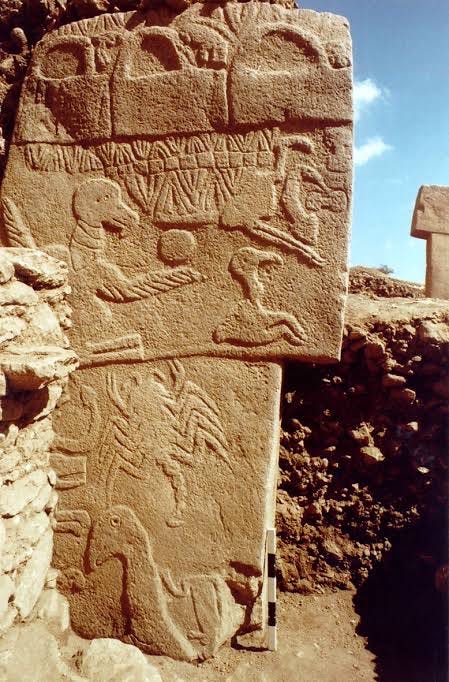
The Dogon people of Mali, West Africa, have maintained an oral tradition containing detailed knowledge of the Sirius star system, so detailed that Western astronomy literally dismissed it. This information was dismissed until it couldn’t be, and had to be confirmed through empirical evidence in the 20th century.
The Dogon describe Sirius B, the white dwarf companion to Sirius A, as extremely dense, orbiting Sirius A in a 50-year elliptical cycle. They call it Po Tolo, "the smallest seed." Sirius B was first observed through a telescope in 1862 and wasn't photographed until 1970. The Dogon's description matches the astrophysical properties of a white dwarf exactly: extreme density, small size, even the exact orbital period (6).
Researcher Laird Scranton, in "The Science of the Dogon," traced the Dogon's cosmological knowledge back through Egypt to what he argues is a pre-catastrophe source; a knowledge tradition that preserved advanced astronomical and physical understanding through millennia of oral transmission, encoded in myth and ritual that survived the dark periods when the knowledge's literal meaning was inaccessible (6).
Sirius is the brightest star in the night sky. It's also one of the closest, 8.6 light-years from the Sun. In the Egyptian tradition, Sirius is Isis, the divine feminine, the restorer, the star whose annual appearance at dawn (its heliacal rising) marked the beginning of the New Year and predicted the Nile's life-giving flood.
The Great Pyramid's Queen's Chamber shaft points directly at Sirius. The Dogon maintain a 50-year ceremonial cycle tracking Sirius B's orbit, the next occurring in 2027. The Egyptian calendar was anchored to Sirius's heliacal rising. Three independent systems architectural, oral-traditional, and calendrical, all targeting the same star, across cultures separated by thousands of miles.
Anyone who has studied the mystery schools of the world or has read the book The Secret Teachings of All Ages by Manly P. Hall (who was a 33rd degree Freemason) has encountered the hypothesis that we are in a binary star system with Sirius. Whether this is true or not, there is not enough empirical evidence to confirm this. However, Sirius's proximity to the solar system means its gravitational and electromagnetic influence on our local cosmic environment is significant. The cosmic rays that travel outward from the galactic center pass through the local stellar neighborhood on their way to the Sun. The local stellar environment, including Sirius, modulates the cosmic ray flux that reaches the solar system. The ancients may have been encoding not just a star but a relationship, the relationship between Sirius, the cosmic ray environment, and the Sun's behavior.
The Dendara Zodiac
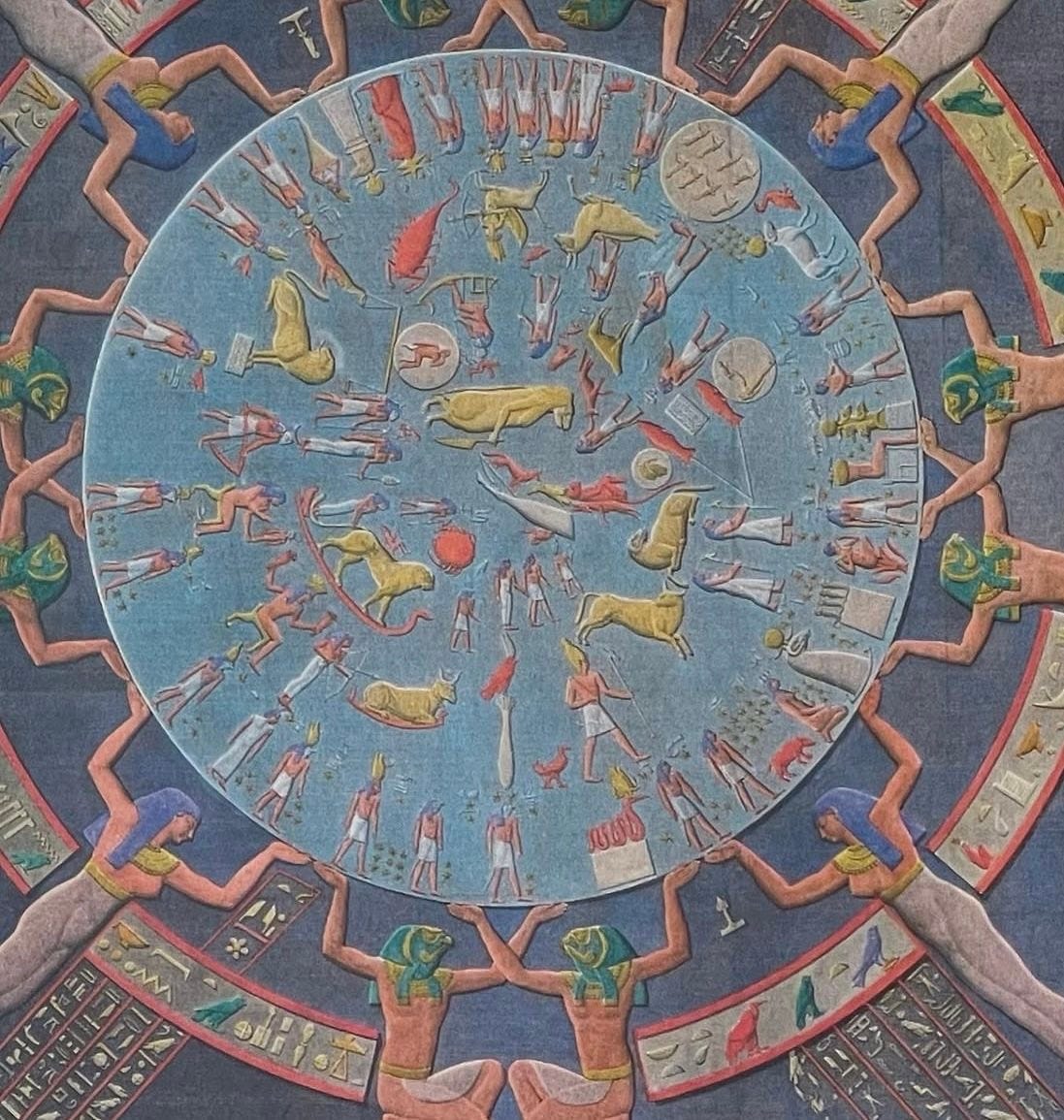
In the Temple of Hathor at Dendera, Egypt, a circular bas-relief carved into the ceiling depicts the complete zodiac. Twelve constellations are arranged around a central axis, with specific figures marking specific astronomical positions.
The Dendera Zodiac is the only complete circular zodiac surviving from the ancient world. Scholars have debated its date for two centuries. The temple itself was constructed during the Ptolemaic period (approximately 50 BCE), but the zodiac's astronomical markers may encode a significantly earlier date, possibly the same precessional era that the Giza and Angkor complexes memorialize (7).
The zodiac depicts the constellations with specific markers that indicate the precessional position of the equinoxes, the slow shift of the spring equinox sunrise through the zodiacal constellations over the roughly 26,000-year cycle. Different analyses produce different dates, but the zodiac's significance lies less in its specific date than in what it demonstrates: the builders possessed a complete understanding of the precessional cycle and encoded it in a single image, a map of astronomical time carved into a temple ceiling.
The precessional cycle is the longest astronomical cycle observable from Earth. Understanding it requires centuries of sustained observation, tracking the slow shift of the equinox sunrise against the background stars over periods that exceed any individual lifetime by an order of magnitude. The knowledge required to produce the Dendera Zodiac implies either an unbroken observational tradition spanning millennia or the inheritance of compiled observations from a predecessor civilization that maintained the tradition before the current one began.
The Theory That Just Got Confirmed
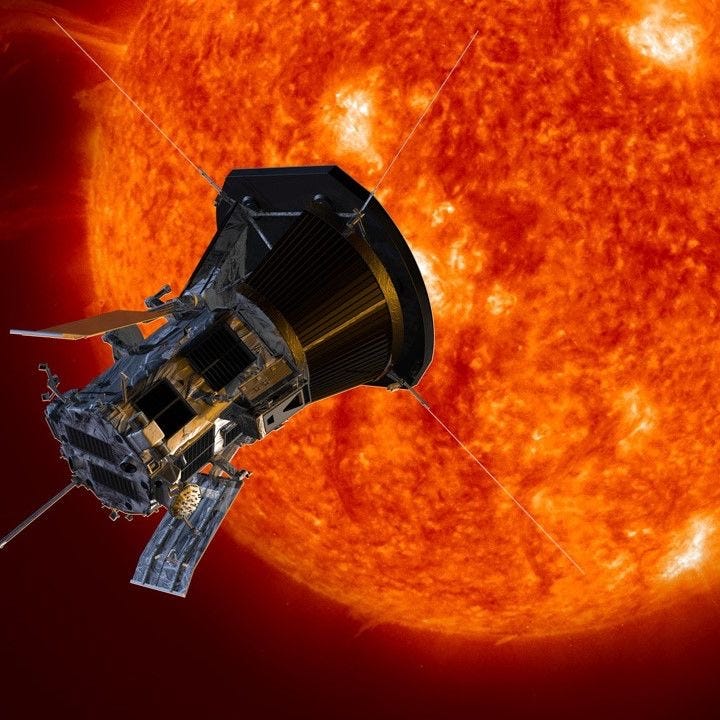
In 1983, physicist Paul LaViolette proposed a theory that was considered fringe for decades. He asserted that the galactic center (the same encoded on the Vulture Stone at Göbekli Tepe) periodically emits intense bursts of cosmic rays, "galactic superwaves", that travel outward through the galaxy and impact the solar system at intervals correlated with the precessional cycle. When a superwave arrives, LaViolette argued, it interacts with the interplanetary dust medium, increasing the dust's density and its interaction with the Sun, producing elevated solar activity; increased flares, increased coronal mass ejections, increased solar output (8).
The theory required a specific physical mechanism to work, cosmic dust had to survive passage through the Sun's corona and participate in solar energy dynamics. Without this mechanism, the galactic cosmic rays had no way to influence the Sun's behavior. In 2026, NASA's Parker Solar Probe, which has flown closer to the Sun than any spacecraft in history, confirmed that cosmic dust does in fact survive in the corona and does participate in solar energy dynamics (9).
The mechanism LaViolette proposed four decades ago has been confirmed by direct observation. This doesn't prove LaViolette's complete theory. But it establishes the physical basis for what the theory proposes: that the sun's behavior is influenced by energy inputs from outside the solar system, inputs that vary based on the galactic cosmic ray flux and the local interplanetary dust environment.
Solar Cycle 25, the current solar cycle, has exceeded every prediction model. The cycle was forecast to be weak, yet it has consistently outperformed, producing activity levels that rival the most active cycles in the modern observational record. The models that predicted a weak cycle were based solely on the Sun's internal dynamics, They did not account for external inputs (10).
If the Sun's current overperformance is driven even partially by an external input, an increase in the galactic cosmic ray flux reaching the solar system through the mechanism the Parker Solar Probe confirmed, then the models will continue to underpredict because the models don't include the variable that's driving the overperformance.
The Synthesis
Göbekli Tepe encodes the galactic center's position at the time of the Younger Dryas catastrophe; the event that ended the previous age. Giza encodes Orion's position and Sirius's position in the same era, a memorial in stone aimed at the sky of the world before the flood. Angkor Wat encodes Draco's position in the same era; a second memorial on a second continent confirming the same date. The Dendera Zodiac maps the complete precessional cycle, the clock against which all the other encodings are calibrated.
The Dogon still preserve the Sirius system's orbital mechanics, the local stellar environment that modulates the cosmic energy reaching the sun.
Five independent encoding systems from three continents that supposedly come from separate cultural traditions. All pointing at the same astronomical relationships while all encoding the same temporal window…all memorializing or coming after the same event.
The builders of these sites didn't know each other, or at least not according to conventional history. They all encoded the same astronomical data using the same methodology; terrestrial architecture mirroring celestial positions, with the precessional cycle providing the temporal reference frame.
The encoding methodology implies a shared source, either a common predecessor civilization that distributed the knowledge before the catastrophe, or a common astronomical tradition that multiple civilizations independently developed to the same level of precision. Either explanation requires a revision of the conventional understanding of human history's timeline.
The precessional cycle is approximately 26,000 years while the half-cycle is approximately 13,000 years. The Younger Dryas was approximately 12,800 years ago. By this calculation the half-cycle is approaching or is currently inside its return.
The Parker Solar Probe confirmed the physical mechanism by which the galactic center's energy output reaches the Sun. The Sun is overperforming every model that doesn't account for this mechanism. The Earth's magnetic shield, the shield that protects the surface from the Sun's output, is weakening through an unexplained reversal in the planet's core dynamics, confirmed by the European Space Agency in August 2026 (11).
The monuments encode the warning that the ancients were desperately trying to get to us. The ancients are practically screaming at us, the question is whether we hear them.
Preemptively Debunking the Debunkers
Now I will do something that should not only prove the authenticity of the provided synthesis but also give the reader a framework for navigating their own research and hopefully finding conclusions that align with the evidence in this article. Because this synthesis is found virtually nowhere, most academics or AI trained on the academic framework will dismiss this synthesis, the evidence, and the conclusions of this article almost instantaneously. This is my attempt at refuting the debunking.
The debunking doesn’t engage with the data. The debunking almost always engages with the sources’ credentials. Bauval isn’t an Egyptologist with a tenured position, therefore the Orion correlation is dismissed. Graham Hancock isn’t a trained archaeologist, therefore the Angkor Wat correlation is dismissed. Paul LaViolette wasn’t mainstream when he first published, therefore the galactic superwave is dismissed. Laird Scranton isn’t an anthropologist, therefore the Dogon analysis is dismissed.
The argument from authority says that the person making the claim doesn’t hold the institutional credential that authorizes the claim, therefore the claim is invalid. The argument never addresses whether the claim itself is accurate. The Orion correlation either matches the pyramid ground plan or it doesn’t; and it does, which is why the debunking has to attack the claimant rather than the claim.
If you Google whether we can build the pyramids now with modern technology, Google will say yes definitively. The content of the answer (“yes, we could build the pyramids with modern technology”) is actually contested even within engineering circles; due to the precision of the stone cutting, the logistics of moving 2.3 million blocks, the leveling of the base to within fractions of an inch across many acres.
When the authority argument fails (because the inquirer doesn’t accept credentials as a substitute for evidence), the debunking shifts to reducing the claim to its weakest possible formulation and then demolishing the reduced version.
The Orion correlation can be reduced to “Bauval says aliens built the pyramids.” Bauval never said aliens built the pyramids. Bauval said the ground plan correlates with Orion’s belt at 10,500 BCE and that this implies a significantly earlier date for the complex’s conceptual origin than conventional Egyptology accepts. The Göbekli Tepe evidence can be reduced to “Fringe theorists say Göbekli Tepe was built by Atlanteans.” No serious researcher says this. The serious claim is that the site’s monumental scale and astronomical encoding require organizational and intellectual capacity that the “simple hunter-gatherer” model doesn’t account for.
When the straw man fails (because the inquirer specifies the actual claim rather than accepting the reduction), the debunking shifts to demanding a mechanism that the claim can’t provide with current knowledge.
“How exactly did a pre-Younger Dryas civilization transmit astronomical knowledge to the Dogon?” The question itself is a legitimate one and the answer is genuinely unknown in its specifics. The debunker uses the absence of a specific mechanism to dismiss the entire claim, including the parts that are evidently supported (the Dogon’s accurate knowledge of Sirius B), because the transmission mechanism is unclear.
The deepest defense, the one operating beneath all the others, is the assumption that the past was like the present, that the forces operating in the past were the same forces operating now, at the same intensity, producing the same effects. This is uniformitarianism, the geological and historical assumption that the present is the key to the past.
Uniformitarianism works well for slow processes, erosion, sedimentation, tectonic drift. Uniformitarianism fails catastrophically for rapid processes, the Younger Dryas, the Miyake solar events, the Carrington Event.
The previous civilization hypothesis violates uniformitarianism because the hypothesis says that the past included a discontinuity; an event so powerful that it destroyed a civilization whose existence the uniformitarian framework can’t accommodate. After all, the framework assumes no such discontinuity occurred.
If these ancient cultures had complete knowledge of the precession, encoded the galactic center, built with precision that modern construction can’t replicate at scale, and placed their monuments to align with celestial configurations from 10,500 BCE… then either they descended from a higher culture or they were at such a level independently. Either way, the uniformitarian assumption that human civilization developed linearly from simple hunter-gatherers to modern complexity is wrong.
If the assumption is wrong, the conclusion logically leads to cyclical civilization; civilizations that rise, peak, are destroyed by the cyclical cataclysm, and rebuild from the survivors’ encoded knowledge. The conclusion isn’t radical and in fact the conclusion is what the evidence says when the evidence is held without the uniformitarian filter.
One of the perfect examples for this would be the debunking of the evidence and assertion that Giza is aligned exactly with the constellation Orion. The mainstream academic debunking asserts that for Bauval’s findings to be accurate, you actually must have to flip the Giza complex for it to align with Orion. To mainstream academia, this is the ultimate proof that supposedly invalidates his finding. “If you don’t flip the Giza complex to align with Orion, it doesn’t align with Orion.”
The Hermetic teaching of "As above, So below,” addresses the mirror question directly. The argument that the Orion correlation is invalid because the pyramids need to be “flipped” to match the sky misses the entire point of the Hermetic framework, the earth is the mirror of the heavens. The mirror reflects, and a reflection is flipped. The flipping isn’t a flaw in the correlation, the flipping is the correlation: the earth reflecting the sky the way a mirror reflects the face, reversed along one axis because THAT’S WHAT MIRRORS DO.
The Emerald Tablet, the foundational Hermetic text attributed to Hermes Trismegistus says “That which is below is like that which is above, and that which is above is like that which is below, to accomplish the miracles of the one thing.” The one thing is the pattern, the pattern that expresses itself at every scale, from the galactic to the planetary to the architectural to the personal. The pattern mirrors because the pattern is a mirror; reality reflecting itself at every scale, each reflection reversed along the axis of manifestation, each reversal confirming the mirroring rather than disproving it.
The pyramids reflecting Orion in reverse is the Hermetic teaching demonstrated in limestone. The debunker who says “but it’s flipped” is saying “but it’s a mirror”, which is exactly what the builders said the earth is.
I hope by now I’ve laid down a fundamental basis of evidence and knowledge to show you without any misconceptions the complete celestial key. It has taken me many years and much of my time to get to this perception, and that is deeply saddening and gratifying simultaneously. The ancients encoded this information in stone so that it could transcribe a message that would last throughout the scale of weather and time. The fact that this information is so hard to attain makes holding the complete perception that much more gratifying. This article was not written to convince you of anything or to make you believe in anything. This article’s sole purpose was to illuminate the reader to the literal message transcribed in stone. The message that is being passed from the builders to us is literally your birthright to know. I hope by now you can say you possess the celestial key.
Sources
Humanity ought to expect a planetary cataclysm — caused by cosmic rays generated from the galactic center and the sun accreting interplanetary dust (resulting in more intense solar activity, including perhaps a nova-like event) and the earth’s weakening magnetic field — in the next several decades to the next two centuries. In the meantime, the psychopathic (and sociopathic and malignantly narcissistic and sadistic and Machiavellian) ruling class arranges for its survival and takes more and more control over the commoners.
Love the weird shit that we can prove with science. The dogon stuff in particular is fascinating because there really is no other logical explanation than ancient humanity understood a lot more about the stars than we are told they did.